
How to Avoid Seasickness on a Bosphorus Cruise — Expert Tips
Quick Answer
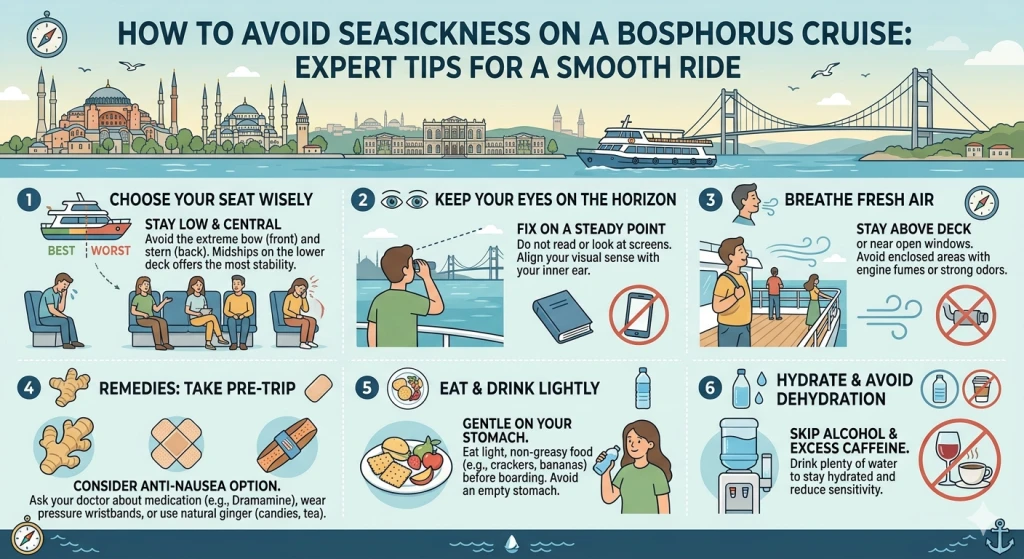
For most travelers, seasickness on a Bosphorus cruise can be reduced with a few simple habits: choose a stable seat, look at the horizon, avoid heavy meals and too much alcohol, stay hydrated, and keep your head still when possible. Public health and clinical guidance also supports fresh air, slow breathing, light snacks, and—if you are very sensitive to motion—considering motion-sickness medication before travel.
At Transfer3e, we know most guests book a Bosphorus cruise to enjoy the skyline, dinner, and atmosphere—not to spend the evening feeling unwell. The good news is that the Bosphorus is usually a gentler cruise environment than open sea travel, and for most people, the right preparation is enough to keep the night comfortable. That is what this guide is about.
Why Some People Feel Sick on a Boat Even When the Water Looks Calm
Seasickness is a form of motion sickness. It happens when your brain gets mixed signals from what your eyes see and what your inner ear senses. Health guidance consistently recommends reducing that mismatch by focusing on a stable point, minimizing unnecessary motion, and avoiding triggers like alcohol, smoking, and sleep deprivation.
This is why one person can feel completely fine on a Bosphorus cruise while another starts to feel uneasy even on a relatively calm ride. It is not always about rough water. It is often about sensitivity, fatigue, what you ate before boarding, and how you position yourself during the cruise.
1. Choose the Most Stable Part of the Boat
NHS guidance for motion sickness specifically recommends sitting in the middle of a boat to reduce motion. That is one of the simplest and most effective decisions you can make before the cruise even starts.
For Bosphorus guests, this usually means avoiding the areas that feel the most movement and choosing a seat where the ride feels more balanced. At Transfer3e, this is one reason we encourage guests who are prone to motion sickness to mention it in advance when possible. The right seating choice can make a noticeable difference.
2. Look at the Horizon, Not at Your Phone
One of the most repeated motion-sickness tips from both CDC and NHS guidance is to look straight ahead at a fixed point such as the horizon. The same sources also advise avoiding reading or looking closely at screens if motion sickness is a problem.
On a Bosphorus cruise, this matters more than people think. If you spend too much time looking down at your phone, editing photos, or reading a menu while the boat moves, you can make the symptoms worse. A better approach is simple: enjoy the skyline, the bridges, and the waterline. Istanbul itself becomes part of the solution.
3. Do Not Board on a Heavy, Greasy, or Overfull Stomach
Motion-sickness guidance from NHS-linked clinical materials and Mayo Clinic supports lighter eating before travel. Heavy meals can make nausea worse, while light snacks such as plain crackers may help some people.
That does not mean you should board hungry. It means you should keep it balanced. For a Bosphorus cruise, the best approach is usually:
- eat lightly before boarding
- avoid greasy or very spicy food right beforehand
- do not arrive overly full
- take small bites rather than rushing food if you start to feel uneasy
For most travelers, this feels much better than turning the cruise into a “big pre-dinner” event before the actual onboard experience begins.
4. Stay Hydrated and Go Easy on Alcohol
CDC recommends staying hydrated with water and limiting alcoholic and caffeinated beverages when dealing with motion sickness. Mayo Clinic also suggests sipping cold water and eating lightly.
This is one of the reasons many guests do perfectly well on a Bosphorus dinner cruise with soft drinks included. If you are someone who gets motion sick easily, hydration and a lighter drink choice are often more helpful than turning the evening into an alcohol-heavy night. From a comfort point of view, that can be the difference between enjoying the Bosphorus and spending the cruise trying to settle your stomach.
5. Get Fresh Air Whenever You Can
NHS guidance recommends fresh air if possible, and slow breathing is also commonly advised.
On a Bosphorus cruise, stepping into fresh air or choosing a well-ventilated area can help if you start feeling uneasy. The combination of cooler air, slower breathing, and looking outward can calm symptoms before they build. This is one of the easiest non-medication strategies, and for many mild cases it is enough.
6. Sleep Matters More Than Most Travelers Realize
The CDC Yellow Book notes that being sleep-deprived can worsen motion sickness. Alcohol and smoking can also increase it.
This is especially relevant in Istanbul, where travelers often arrive after long flights, airport transfers, and packed sightseeing schedules. Sometimes what feels like “boat sensitivity” is partly exhaustion. If you know you are sensitive to motion, try not to book a cruise at the exact point in your trip when you are most tired.
At Transfer3e, we often see the happiest cruise guests as the ones who treat the evening as a highlight—not as the final push of an already exhausting day.
7. Ginger May Help, But It Is Not a Guarantee
NHS, CDC, and Mayo Clinic all mention ginger in some form—such as ginger tea, ginger candy, candied ginger, or supplements—as something that may help some travelers. But the CDC Yellow Book also notes that evidence for ginger and similar complementary approaches is mixed or weak.
The honest takeaway is this: ginger is reasonable to try, but it should be seen as a helpful extra, not a guaranteed fix. For many people, the best results come from combining it with the basics: stable seating, hydration, fresh air, and looking at the horizon.
8. Motion-Sickness Bands Are Popular, but Evidence Is Limited
Mayo Clinic notes that acupressure bands are used by some travelers, but the CDC also states that research does not support acupressure or magnets as proven motion-sickness prevention tools.
So if you like them and feel they help you, that is your choice. But from an evidence-based point of view, you should not rely on them as your main strategy for a Bosphorus cruise.
9. Consider Medication If You Know You Are Highly Sensitive
If you have a history of motion sickness, medication may be worth discussing with a pharmacist or clinician before travel. NHS-linked self-care guidance specifically suggests speaking to a pharmacist for over-the-counter medicine advice.
This is especially relevant if you already know that:
- boats affect you quickly
- buses or winding roads make you nauseous
- cruises have been a problem for you before
That said, medication choices can have side effects such as drowsiness, so it is best to get personal advice rather than guessing.
10. If Symptoms Start, Act Early
CDC and NHS guidance both support simple early actions: look at the horizon, close your eyes if helpful, breathe slowly, get fresh air, drink water, and reduce sensory overload.
That matters because mild motion sickness is easier to calm than full nausea. If you notice the first signs—warmth, slight dizziness, unsettled stomach, yawning, or discomfort—do not wait too long. Pause the photos, step into fresh air, sit more steadily, and let your body reset.
What Usually Works Best on a Bosphorus Cruise
For most Transfer3e guests, the most practical formula is simple:
- do not arrive overtired
- avoid a heavy pre-cruise meal
- drink water
- choose a stable seat
- look outward at the Bosphorus
- limit alcohol if you are sensitive
- use ginger or medication only as support, not as your whole plan
That combination fits the kind of evening most people actually want in Istanbul: scenic, relaxed, and memorable.
Why the Bosphorus Can Be Easier Than People Expect
Many travelers hear “boat” and immediately imagine rough sea conditions. But the Bosphorus is not the open ocean. For many guests, the cruise feels manageable, especially when the weather is reasonable and the evening is approached with a little preparation.
That is one reason we always recommend thinking about comfort before boarding, not after symptoms start. In most cases, prevention is easier than recovery.
A More Comfortable Bosphorus Night with Transfer3e
At Transfer3e, we design Bosphorus evenings around comfort, not confusion. Our guests usually want the same thing: a night that feels smooth from beginning to end.
That is why we focus on experiences built around:
- easy planning
- clear inclusions
- comfortable pacing
- a relaxing Bosphorus atmosphere
- a guest experience that feels enjoyable, not overwhelming
If you are worried about seasickness, you do not need to cancel the idea of a Bosphorus cruise. You just need to approach it smartly.
Transfer3e
Website: www.transfer3e.com
WhatsApp / Contact: +90 541 334 2102
Final Thoughts
Most travelers can avoid or reduce seasickness on a Bosphorus cruise with a few evidence-based habits: sit in a stable area, look at the horizon, keep hydrated, avoid heavy food and too much alcohol, get fresh air, and do not board overtired. Public health guidance supports all of these as sensible ways to lower the chance of motion sickness.
And that is the good news: for most people, enjoying the Bosphorus comfortably is not about luck. It is about preparation.