Sultanahmet Street Food Guide 2026: Authentic Istanbul Eats
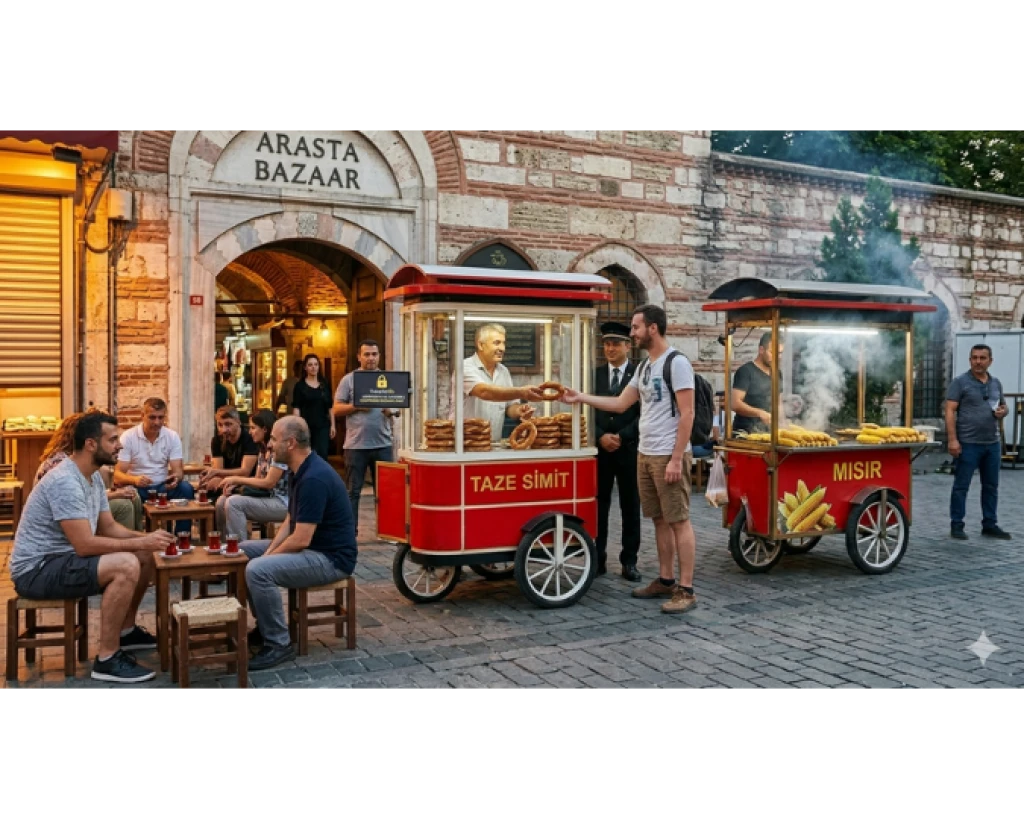
The best food around Sultanahmet is simple and cheap: a simit from a cart, balık ekmek by the water at Eminönü, döner or lahmacun at a counter, and baklava with a glass of tea. By law, restaurants must post their prices at the door and on the tables, and service and cover charges have been banned since January 2026, so read the price list before you sit down and compare a few places.
Savoury street food to try
| Food | What it is | Where to find it | Good to know |
|---|---|---|---|
| Simit | A ring of bread crusted with sesame seeds | Carts and bakeries everywhere | About 30 TL at bakeries and carts (checked October 2026); cafés set their own prices |
| Kestane and mısır | Roasted chestnuts; grilled or boiled corn on the cob | Street carts | Chestnuts are an autumn and winter snack |
| Balık ekmek | Grilled fish, usually mackerel, in bread with onion and salad | The boats at Eminönü by the Galata Bridge | Watch for small bones |
| Midye dolma | Mussels stuffed with spiced rice, eaten with lemon | Street sellers with trays | Buy only from busy sellers |
| Kokoreç | Grilled lamb intestines, chopped with spices, in bread | Small grill shops | Strong flavour; a half portion is a good start |
| Döner and dürüm | Meat or chicken sliced from a vertical spit, in bread or a thin wrap | Counters on Divan Yolu and in Sirkeci | Check which size and bread the price refers to |
| Lahmacun and pide | Thin flatbread with spiced minced meat; boat-shaped flatbread with toppings | Pide restaurants (pide salonu) | Roll lahmacun up with parsley and lemon |
Simit is the classic breakfast on the move, often with a glass of tea or a wedge of cheese. Balık ekmek is the quick lunch of Eminönü: you eat it on low stools by the boats, with pickle juice if you want the local version. Döner comes "ekmek arası" (in bread) or as a dürüm (wrap). Kokoreç and midye dolma are popular late at night, but if you have a sensitive stomach, try them early in your trip rather than the night before a flight.
Sweets: lokum, baklava and ice cream
Lokum (Turkish delight) and baklava are sold by weight, so ask for 250 grams or a mixed box rather than pointing at a tray. Look at the price per kilo on the label before the seller starts packing. Long-established names near Sultanahmet include Hafız Mustafa 1864, with shops in Sultanahmet, Sirkeci and Eminönü, and Altan Şekerleme in Eminönü, making sweets since 1865.
Baklava is layers of thin pastry with pistachios or walnuts and syrup. Pistachio (fıstıklı) is the classic choice. Maraş-style ice cream (dondurma) is thick and stretchy because it contains salep, a flour made from orchid roots, and mastic resin. Vendors like to play tricks with the cone before they hand it over. Agree the price before they start.
Tea, coffee and seasonal drinks
- Çay: black tea in small tulip-shaped glasses, served everywhere, all day.
- Turkish coffee: thick and unfiltered. Order it sade (no sugar), orta (medium) or şekerli (sweet). Kurukahveci Mehmet Efendi has sold coffee on Tahmis Sokağı, beside the Spice Bazaar, since 1871.
- Boza: a thick, slightly sour drink of fermented grain, traditionally sold in the cold months and topped with cinnamon and roasted chickpeas. Vefa Bozacısı has served it since 1876, a short walk from the Vezneciler metro station.
- Salep: hot milk thickened with orchid-root flour and dusted with cinnamon, a winter favourite in cafés.
- Fresh juice: carts squeeze orange and pomegranate juice while you wait. Ask the price of a small and a large glass first.
Where to eat around Sultanahmet
- Divan Yolu: the avenue the tram follows west from Sultanahmet has döner counters, simple restaurants and dessert shops. Tarihi Sultanahmet Köftecisi, at Divan Yolu 12, has served grilled köfte (meatballs) with piyaz (white bean salad) since 1920.
- Eminönü and the Spice Bazaar: 3 tram stops downhill from Sultanahmet. Here you find the balık ekmek boats, nut and dried-fruit stalls, and coffee and lokum shops around the Spice Bazaar (Mısır Çarşısı).
- Around the Grand Bazaar: near the Çemberlitaş and Beyazıt–Kapalıçarşı tram stops, small tradesmen's restaurants (esnaf lokantası) serve ready-cooked stews, rice and vegetables to people who work in the bazaar.
- Sirkeci: the streets around the station, between Sultanahmet and Eminönü, are lined with simple kebab and döner counters.
How to avoid tourist-trap prices
The law in Türkiye is on your side in 2 ways:
- Since 1 January 2024, restaurants, cafés and similar places must post their price lists in front of the entrance and on the tables, where you can easily see and read them. You should not need to scan a QR code to find a price.
- Since 30 January 2026, they may not charge a service, table or cover (kuver) fee, and starters served without your order cannot be billed. Tips are voluntary.
Before you sit down, compare the price lists of 2 or 3 places. Check whether fish and meze are priced per portion or per kilo, and ask the price of any dish that is not on the list. When the bill comes, check it line by line. If a business breaks the rules, you can complain to the Ministry of Trade on 175 or to the municipal police (zabıta) on 153.
Hygiene and vegetarian tips
- Choose busy stalls with quick turnover, where food is cooked or kept hot in front of you.
- Mussels must be kept cool. If a tray has been standing in the sun, skip it.
- Carry wet wipes or hand gel, as you eat much street food with your hands.
- Carry some cash in small notes for carts and stalls.
Vegetarians eat well too. Look for simit, chestnuts and corn, gözleme (thin folded flatbread with cheese, spinach or potato), cheese pide, mercimek çorbası (lentil soup), menemen (eggs with tomatoes and peppers) and the vegetable dishes cooked in olive oil (zeytinyağlı) in most simple restaurants. Çiğ köfte sold in shops must be meat-free by law; it is a spicy bulgur mix eaten in a wrap or lettuce leaf. Soups and rice are sometimes made with meat stock, so ask "Etsiz mi?" (Is it meat-free?). "Vejetaryenim" means "I am vegetarian".
Ramadan evenings
During Ramadan, many Muslims fast from dawn to sunset, and the evening meal, iftar, begins at sunset. According to the Diyanet calendar, Ramadan 2027 starts on 8 February, and Ramazan Bayramı falls on 9–11 March 2027. Most restaurants and cafés in the tourist areas stay open during the day, but eat and drink discreetly near mosques.
In the hour before iftar, bakeries sell round Ramazan pide, a bread baked especially for this month, and restaurants fill with people waiting for the call to prayer, so book a table or arrive early. In Ramadan 2026 there was an iftar tent on Sultanahmet Square serving free meals.
Getting there and getting back
The T1 tram links these food areas: Eminönü, Sirkeci, Gülhane, Sultanahmet, Çemberlitaş and Beyazıt–Kapalıçarşı are consecutive stops. A full İstanbulkart fare is 46.20 TL, and contactless bank cards also work on the tram. Plan meals around the sights with our Sultanahmet sights guide and our guide to the cisterns, and see our Istanbul food guide for the rest of the city.
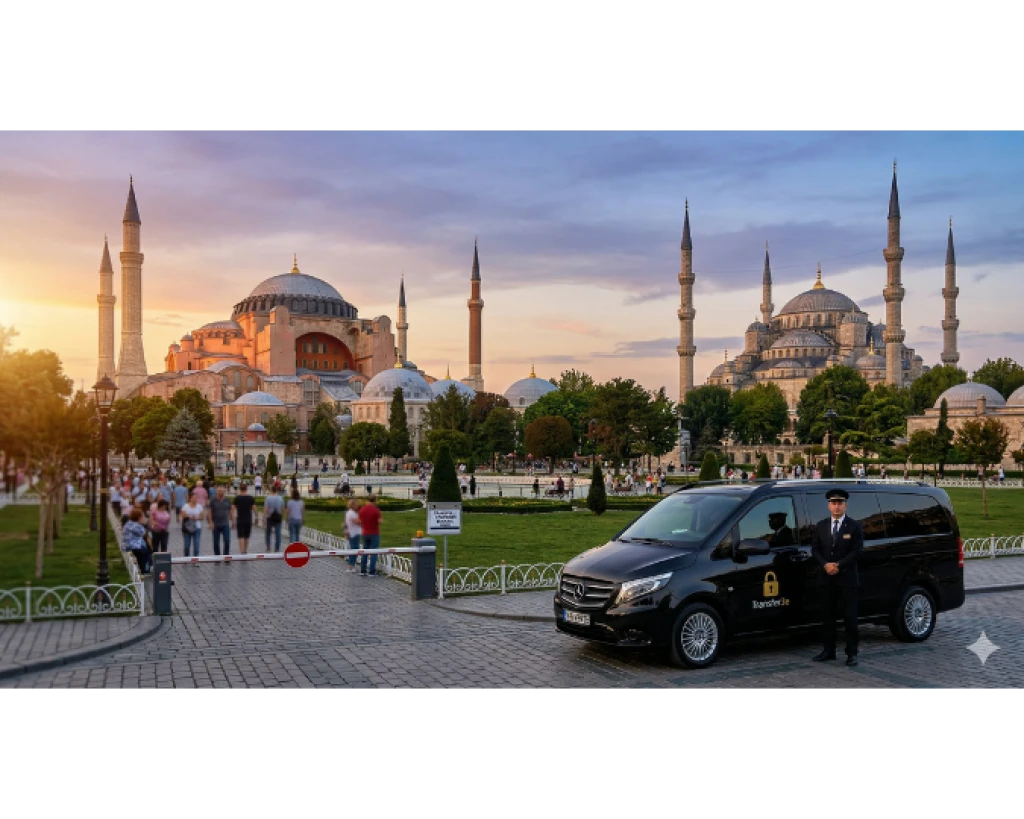
Arriving by air? Our Istanbul Airport to Sultanahmet and Sabiha Gökçen to Sultanahmet transfers have a fixed price per vehicle, agreed when you book. Many Sultanahmet streets are narrow or pedestrian, so the driver stops at the nearest drop-off point to your hotel.
Frequently asked questions
Do restaurants in Istanbul charge a service fee?
They are not allowed to. Since 30 January 2026, service, table and cover charges are banned, and starters you did not order cannot be billed. Tipping is up to you.
How much does a simit cost?
About 30 TL at bakeries and street carts after the price rise in late September 2026. Cafés set their own, higher prices.
Is street food in Sultanahmet safe to eat?
Generally, yes, if you choose busy stalls with freshly cooked, hot food. Take extra care with mussels and with anything that has been standing in the sun.
Where can I try boza?
Vefa Bozacısı, in business since 1876 near the Vezneciler metro station, is the classic address. Boza is traditionally a cold-weather drink.