


Hidden Bosphorus – Beautiful Places Beyond Ortakoy and Bebek
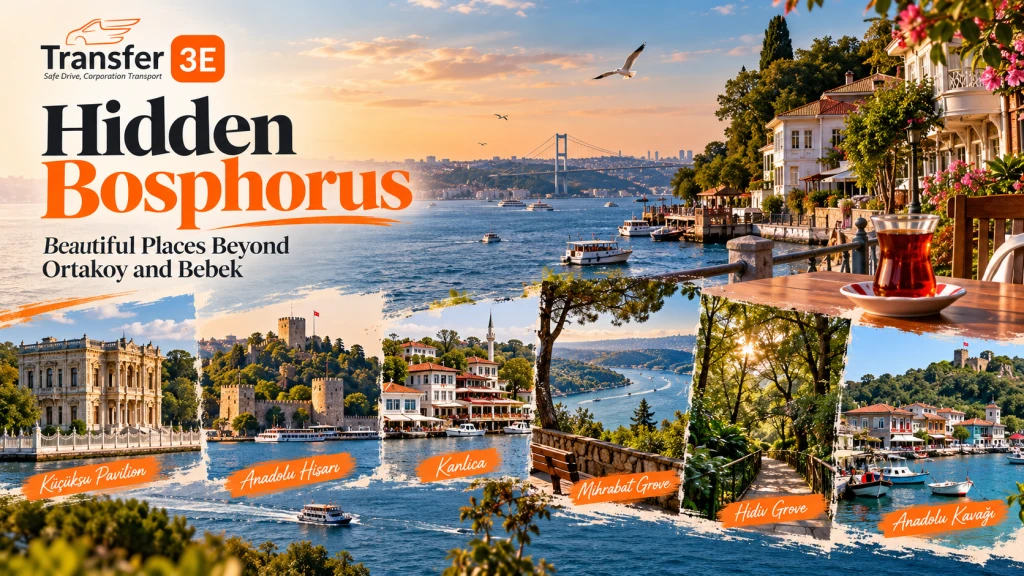
Hidden Bosphorus – Beautiful Places Beyond Ortakoy and Bebek
Ask a first-time visitor where to see the Bosphorus and the answer will usually be the same: Ortaköy, Bebek or perhaps a Bosphorus cruise.
They are beautiful places, and you should see them.
But they are not the whole Bosphorus.
Continue along the shoreline and Istanbul gradually changes. Large tourist groups become less common. Historic waterfront houses appear between trees. Locals sit beside the water with tea. Small ferry piers become the centers of neighborhoods. Ottoman pavilions stand almost directly on the Bosphorus, while old fortresses remind you that this peaceful waterway was once strategically vital to empires.
This is the Bosphorus we want visitors to discover.
If you leave Istanbul after seeing only Ortaköy Mosque and Bebek, you have seen some of the Bosphorus's most famous photographs.
But you have not necessarily experienced Bosphorus life.
Our recommendation is simple:
Give yourself one day to go farther.
Cross to the Asian shore, follow the water north and allow Istanbul to become quieter as you travel.
You may find that the places you had never heard of become some of your strongest memories of the city.
Hidden Bosphorus Quick Guide
PlaceAreaBest ForSuggested TimeÇengelköy | Üsküdar | Local Bosphorus atmosphere | 45–90 min |
Küçüksu Kasrı | Beykoz | Ottoman architecture & photos | 60 min |
Anadolu Hisarı | Beykoz | History & waterfront walking | 45–60 min |
Kanlıca | Beykoz | Tea, yogurt & slow Bosphorus life | 45–90 min |
Mihrabat Korusu | Kanlıca | Panoramic Bosphorus views | 60–90 min |
Hidiv Korusu | Çubuklu | Nature, history & viewpoints | 60–90 min |
Anadolu Kavağı & Yoros | Northern Bosphorus | Village atmosphere & Black Sea views | 2–3 hrs |
1. Çengelköy – See How Istanbul Actually Lives Beside the Bosphorus
📍 Location: Çengelköy, Üsküdar – Asian Side
Çengelköy is not a monument.
That is precisely why it belongs in this guide.
It is a living Bosphorus neighborhood where the waterfront is still part of everyday life rather than simply a place tourists visit for photographs.
Walk toward the water and you will find tea gardens, bakeries, fishermen, small streets and people sitting beside the Bosphorus without feeling the need to constantly move somewhere else.
The neighborhood also sits close to one of the most recognizable buildings on the Asian shoreline: Kuleli, whose distinctive towers have been part of the Bosphorus landscape for generations. The building's military-school history dates to the Ottoman period, with the school founded in 1845 during Sultan Abdülmecid's reign. ,
Why we recommend Çengelköy
Come here if you want to understand why Istanbul residents are so attached to the Bosphorus.
You don't need a ticket.
You don't need a strict itinerary.
Find the waterfront, order tea, walk around the neighborhood and watch ferries and boats pass between Europe and Asia.
This is not sightseeing in the traditional sense.
It is being in Istanbul.
Suggested time: 45–90 minutes.
Combine it with: Kuzguncuk, Beylerbeyi or Küçüksu.
Enis' Local Tip
Don't arrive, photograph the water and immediately leave.
Sit down.
Have tea.
Watch the ferries.
The Bosphorus makes more sense when you stop treating it as a background and start treating it as part of Istanbul's daily life.
2. Küçüksu Kasrı – One of the Bosphorus's Most Beautiful Small Palaces
📍 Location: Göksu, Beykoz – Asian Side
Open Küçüksu Kasrı in Google Maps
We included Küçüksu Kasrı in our historic Istanbul guide, but it deserves another appearance here because its location is fundamental to understanding the Bosphorus.
The pavilion sits between the Göksu and Küçüksu streams in an area used for imperial recreation during the Ottoman period. Earlier structures existed here before Sultan Abdülmecid commissioned the present pavilion in 1856–1857. Its architecture combines a traditional Turkish-house plan with elaborate European-influenced decorative elements.
But history is only half the reason to visit.
The other reason is where it stands.
The pavilion sits almost directly beside the Bosphorus.
Water, architecture and the surrounding Asian shoreline come together in a way that feels completely different from Istanbul's huge palace complexes.
Why we recommend it
Küçüksu works especially well for travelers who want beautiful photographs without spending half a day inside a gigantic museum.
You can experience Ottoman architecture and then immediately continue walking along one of the most interesting sections of the Asian Bosphorus.
The official National Palaces information currently lists Monday as the regular closed day, so check current visiting information before going.
Suggested time: About 1 hour.
Combine it with: Anadolu Hisarı and Kanlıca.
Enis' Local Tip
Take photographs from several angles.
The building itself is beautiful, but putting the Bosphorus in the composition is what makes Küçüksu special.
Without the water, you photograph a pavilion.
With the water, you photograph Istanbul.
3. Anadolu Hisarı – A Fortress Neighborhood Most First-Time Visitors Skip
📍 Location: Anadolu Hisarı, Beykoz
Open Anadolu Hisarı in Google Maps
Most international visitors know Rumeli Hisarı.
Far fewer make time for its older counterpart across the Bosphorus.
Anadolu Hisarı, also historically known as Güzelce Hisarı, was built under Yıldırım Bayezid in the late 14th century as part of Ottoman efforts to control movement through the Bosphorus. Official Istanbul tourism material dates its construction to 1395
The fascinating thing here isn't just the fortress.
It is the neighborhood that grew around it.
Small streets, the Göksu waterfront, old houses, cafés and the Bosphorus create an environment where a major historical monument is incorporated into everyday urban life.
This is one of the qualities that makes Istanbul unusual.
History isn't always behind museum walls.
Sometimes people live around it.
Why we recommend it
Anadolu Hisarı connects three versions of Istanbul at once:
Ottoman military history + neighborhood life + the Bosphorus.
The fortress also helps explain the strategic importance of this narrow waterway long before Istanbul became the modern metropolis visitors see today. Official Istanbul cultural-heritage material continues to highlight Anadolu Hisarı as one of the city's important Bosphorus fortifications.
Suggested time: 45–60 minutes.
Combine it with: Küçüksu Kasrı first, then continue north to Kanlıca.
Enis' Local Tip
Don't treat Anadolu Hisarı as simply a fortress to tick off your list.
Walk around the surrounding streets.
That is where you begin to understand what is different about Bosphorus neighborhoods: monuments and ordinary life exist almost on top of each other.
4. Kanlıca – Slow Down, Order Tea and Try the Famous Yogurt
📍 Location: Kanlıca, Beykoz
If Çengelköy teaches you how Istanbul lives beside the Bosphorus, Kanlıca teaches you how Istanbul slows down beside it.
The center of the neighborhood revolves around its waterfront square and ferry pier.
People come here to sit, drink tea, watch boats and—of course—eat the yogurt for which Kanlıca became famous.
Kanlıca yogurt has developed into a genuine local symbol. Beykoz Municipality traces the modern local tradition back through generations and notes the familiar custom of serving it with additions such as powdered sugar.
But don't visit Kanlıca only for yogurt.
The real attraction is the setting.
This is one of those places where doing less gives you more.
There doesn't need to be a museum every twenty meters.
The Bosphorus is enough.
Why we recommend it
Kanlıca is ideal if your Istanbul itinerary has become exhausting.
After days of Hagia Sophia, Topkapı, bazaars, traffic and museums, sitting beside the water without a programme can feel surprisingly valuable.
Order something.
Watch a ferry arrive.
Watch it leave.
Then stay for the next one.
Suggested time: 45–90 minutes.
Combine it with: Mihrabat Korusu, which rises above the neighborhood.
Enis' Local Tip
Yes, try the yogurt.
But don't make the yogurt the whole reason for coming.
The real Kanlıca experience is yogurt + tea + Bosphorus + doing absolutely nothing for a while.
Travel does not always need another checklist.
5. Mihrabat Korusu – Look Down on the Bosphorus Instead of Across It
📍 Location: Kanlıca / Beykoz
Open Mihrabat Korusu in Google Maps
Most visitors experience the Bosphorus from water level.
Mihrabat gives you another perspective.
The grove rises above the Asian shoreline around Kanlıca and is known particularly for its observation points over the Bosphorus.
Official Istanbul tourism information describes Mihrabat as a roughly 25-acre grove with different tree species and panoramic Bosphorus viewpoints.
That elevated perspective completely changes the geography.
From below, the Bosphorus can feel enormous.
From above, you begin to understand how close the two continents actually are.
You can see traffic moving across the bridges, ships passing below and neighborhoods climbing the slopes on both shores.
Why we recommend it
Come here if you enjoy:
photography, greenery, panoramic views and places where you can escape central-city noise without actually leaving Istanbul.
This is especially good after Kanlıca.
The two experiences complement each other perfectly:
Kanlıca = Bosphorus at water level.
Mihrabat = Bosphorus from above.
Suggested time: 60–90 minutes.
Enis' Local Tip
If possible, don't schedule Mihrabat in harsh midday light.
Late afternoon makes the Bosphorus much more attractive for photography.
And don't spend the entire visit looking through your phone camera.
Take the photograph.
Then put the phone away.
The view is better in real life.
6. Hidiv Korusu – A Different Side of Bosphorus History
📍 Location: Çubuklu, Beykoz
Open Hidiv Korusu in Google Maps
Continue north and another Istanbul begins to appear.
Hidiv Korusu combines woodland, Bosphorus views and a different strand of late Ottoman-era history.
Official Istanbul tourism material identifies the grove with Ismail Pasha, Khedive of Egypt, and describes it as a large historic green area in Beykoz with Bosphorus viewpoints.
This makes the area interesting because its story is not simply another chapter of Ottoman palace life.
It reflects the wider political and cultural world around Istanbul during the final centuries of the empire.
And once again, the landscape matters just as much as the building.
Trees surround you.
The busy city seems farther away.
Then the Bosphorus suddenly appears through the landscape.
Why we recommend it
Hidiv works well for travelers who want a combination of:
history + nature + architecture + viewpoints
without the atmosphere of a major downtown tourist attraction.
It is particularly useful on an itinerary that continues toward Beykoz or Anadolu Kavağı.
Suggested time: 60–90 minutes.
Enis' Local Tip
Don't judge Istanbul's size only from Sultanahmet, Taksim and Galata.
Travel this far north and you begin to realize that Istanbul contains completely different landscapes within the same city.
That contrast is one of the things I think visitors should experience.
7. Anadolu Kavağı & Yoros Castle – Where the Bosphorus Begins to Feel Like the Black Sea
📍 Location: Anadolu Kavağı, Beykoz
Open Anadolu Kavağı in Google Maps
📍 Yoros Castle: Above Anadolu Kavağı
Open Yoros Castle in Google Maps
If you want to understand how far the Bosphorus extends beyond the Istanbul most tourists know, keep going until Anadolu Kavağı.
By this point, central Istanbul feels distant.
The settlement developed around the northern Bosphorus, close to the Black Sea entrance, and historically had strong connections with sailors, maritime traffic and the strategic control of the strait. Beykoz Municipality describes it as the Bosphorus's last pier and notes its long maritime history.
The atmosphere is closer to a small coastal settlement than central Istanbul.
There are restaurants, fishing boats, hills, greenery and the water opening gradually toward the Black Sea.
Above the village stands Yoros Castle.
The site's history is far more complicated than the common nickname “Genoese Castle” suggests. Beykoz Municipality notes evidence of Byzantine construction and later periods of Genoese and Ottoman control, reflecting just how strategically important the northern entrance of the Bosphorus was.
Why we recommend it
This isn't somewhere to squeeze into a 30-minute gap.
Come here when you have time.
Walk through Anadolu Kavağı.
Eat something.
Look toward the Black Sea.
Then explore the Yoros area as access conditions allow.
The scenery alone explains why generations of empires cared so much about controlling this narrow stretch of water.
Suggested time: 2–3 hours including the village.
Important note
Restoration, archaeological work or safety restrictions can affect access around historic fortress areas. Beykoz Municipality reported ongoing conservation plans for Yoros, so always follow current on-site restrictions rather than entering closed sections.
Enis' Local Tip
This is where I would finish the route.
Start the day inside metropolitan Istanbul and gradually travel north.
By the time you reach Anadolu Kavağı, the scenery has changed so much that it barely feels like the same city.
And yet it is still Istanbul.
That is precisely the point of this entire series.
The Best Hidden Bosphorus Route for One Day
If you have a full day, don't randomly jump between both continents.
Keep the route geographically simple.
I would do it like this:
Çengelköy → Küçüksu Kasrı → Anadolu Hisarı → Kanlıca → Mihrabat → Hidiv → Anadolu Kavağı & Yoros
You don't necessarily need to complete every stop.
For a shorter day, choose:
Çengelköy → Küçüksu → Anadolu Hisarı → Kanlıca → Mihrabat
That gives you neighborhood life, Ottoman history, a fortress, food culture and one of the best elevated Bosphorus viewpoints without travelling all the way north.
For travelers who dislike managing public transportation, multiple transfers or a long northbound route, this is also the type of itinerary where a private driver or chauffeur service can make sense because the stops are spread along the shoreline rather than concentrated around one metro station.
Why You Should Go Beyond Ortaköy and Bebek
Ortaköy is beautiful.
Bebek is beautiful.
There is nothing wrong with visiting either one.
The mistake is believing they represent the entire Bosphorus.
They don't.
The Bosphorus is also an old fortress beside a neighborhood.
It is an Ottoman pavilion beside the water.
It is yogurt in Kanlıca.
It is tea in Çengelköy.
It is trees above Mihrabat.
It is the silence around Hidiv.
And eventually it is Anadolu Kavağı, where Istanbul begins to open toward the Black Sea.
This is why we recommend going farther.
Not because famous places are overrated.
But because Istanbul is too rich to stop at the famous places.
Enis ERBAY's View
For me, the Bosphorus is not simply somewhere you go to take a photograph of the bridge.
It is one of the main reasons Istanbul feels like Istanbul.
Every neighborhood changes the experience.
In Çengelköy you can sit beside the water like a local.
In Küçüksu you see the imperial side of the Bosphorus.
At Anadolu Hisarı you feel the history.
Kanlıca slows everything down.
Mihrabat takes you above the water.
And by the time you arrive in Anadolu Kavağı, the city you saw around Sultanahmet feels very far away.
That is the Istanbul I would want a visitor to see.
If you travel all this way and visit only the places that already appear on every postcard, you will still have a great trip.
But if you go a little farther, Istanbul becomes much more personal.
— Enis ERBAY
Frequently Asked Questions
What are the best hidden places on the Bosphorus?
For first-time visitors wanting somewhere beyond Ortaköy and Bebek, Çengelköy, Küçüksu Kasrı, Anadolu Hisarı, Kanlıca, Mihrabat Korusu, Hidiv Korusu and Anadolu Kavağı form an excellent introduction to the quieter Asian side of the Bosphorus.
Is the Asian side of the Bosphorus worth visiting?
Absolutely. The Asian shoreline offers historic neighborhoods, Ottoman pavilions, fortresses, waterfront squares and green spaces while generally feeling different from the central tourist districts.
Can I visit these places in one day?
Yes, but seven stops would make for a long day. A more comfortable itinerary is Çengelköy → Küçüksu → Anadolu Hisarı → Kanlıca → Mihrabat.
Which place is best for Bosphorus photography?
For elevated panoramic photographs, Mihrabat Korusu is one of the strongest choices in this route. Küçüksu works particularly well for architecture combined with the Bosphorus.
Which area feels most local?
Çengelköy and Kanlıca are particularly good choices if your goal is to experience neighborhood life rather than visit a conventional tourist attraction.
Where should I go if I have more time?
Continue north to Hidiv and eventually Anadolu Kavağı and Yoros Castle. The farther north you travel, the more the character of the Bosphorus changes.
Is this better than visiting Ortaköy?
It isn't a replacement for Ortaköy. It is the next chapter. See Ortaköy, then explore farther and discover how much more the Bosphorus has to offer.
Our partners